What is E 150d?
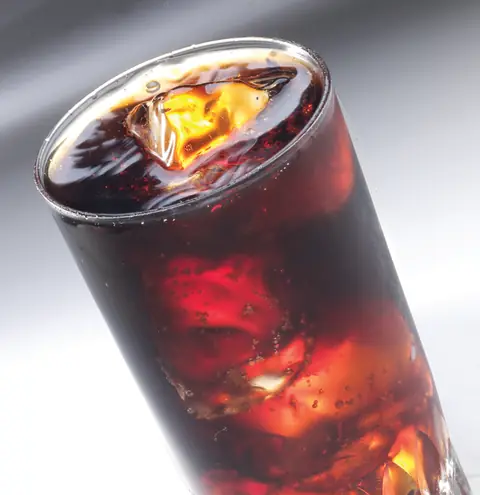
E 150d is the E number of Sulphite ammonia caramel. Brown colour made by heating sugars with ammonium and sulphite compounds. It is typical of cola drinks and is also found in sauces and vinegar.
Where is E 150d most commonly used?
Sulphite ammonia caramel is found above all in cola drinks. It also darkens sauces, condiments and vinegar.
What is E 150d used for?
E 150d belongs to the group "Colours" and is used as colour.
- Colour: Colours add or restore colour in a food.
Which foods may contain E 150d?
According to the European Commission's database, E 150d may be used in 58 food categories and subcategories, each only in specific products and usually with maximum levels. The categories come from these areas:
- Dairy products and analogues
- Edible ices
- Fruit and vegetables
- Confectionery
- Cereals and cereal products
- Bakery wares
- Meat
- Fish and fisheries products
- Salts, spices, soups, sauces, salads and protein products
- Foods for specific groups (infants, young children, special medical purposes)
- Beverages
- Ready-to-eat savouries and snacks
- Desserts
- Food supplements
- Processed foods not covered by categories 1 to 17
Is E 150d vegan?
Usually yes: the substance is normally made from plant, mineral or synthetic raw materials or with microorganisms. In individual cases, only the manufacturer or a vegan label can give certainty.
Is E 150d linked to genetic engineering?
Genetic engineering: May be obtained from plants for which genetically modified varieties exist, such as soya, maize, rapeseed or sugar beet. If the substance comes from a GM plant, this must be stated on the label in the EU (Regulation (EC) No 1829/2003).
In food labelled "ohne Gentechnik" and in organic food, such substances from or by genetically modified organisms are excluded in principle.
How does E 150d appear on the label?
In the list of ingredients, the substance appears with its function, followed by the E number or the name, for example "Colour: E 150d" or "Colour: Sulphite ammonia caramel".
Sources
- Regulation (EC) No 1333/2008, consolidated version of 18.08.2026, Annexes I and II, EUR-Lex
- Food Additives Database, European Commission (accessed 19 October 2026)
- Regulation (EC) No 1829/2003 on genetically modified food and feed, EUR-Lex